![Go to home page [Northam logo]](images/logo.png)


CHIEF EXECUTIVE’S REVIEW
Dear stakeholders
This is Northam’s fourth consecutive sustainable development report in which we record the progress our company has made in the past year with respect to managing the performance of our business.
We also document our progress in terms of meeting the requirements of South African mining legislation – the Broad-based Socio-economic Empowerment Charter (the Mining Charter).
Sustainability for Northam implies the sustainability of the business as a whole, with environmental, social and governance (ESG) issues forming an integral part of the way we conduct our business.
Our over-arching sustainable development policy, aimed at linking our vision for the company and our various underlying policies relating to safety and health, environment and community development at an operational level, outlines our commitment towards managing our ESG issues as part of our business.
We comply with legislation and regulations that govern our operations and our JSE listing. In addition, we also seek to comply with recommendations of good practice and governance in so far as our business objectives allow. We endeavour to engage proactively with all stakeholders, and welcome their feedback on our performance and this report.
Integrated reporting and assurance
We report regularly on our activities and to upholding fundamentally sound values – integrity, responsibility, accountability, fairness and transparency.
For the 2011 financial year, Northam has compiled its first integrated report with the intention of introducing key material aspects of its sustainability issues into the traditional reporting to shareholders and attempts to contextualise the overall performance of the business against these measures. We recognise that this is but a first step in producing a truly integrated report, and have charted a three-year journey to this end.
We have adopted the Global Reporting Initiative’s (GRI) third generation G3.1 sustainability reporting guidelines for our reporting. Certain significant key performance indicators have been assured by our external auditors, Environmental Resources Management Limited (ERM). The independent assurance report is available in the compliance section of this report. We have declared an application level of B+. In addition, this report was submitted for an assessment of the reporting level by GRI.
The material issues we face
In F2009 we identified six key issues and three additional issues were identified in F2010. A further three were added in this reporting year. All the issues outlined below are important to us and are dealt with in greater detail within this report and the annual integrated report.
-
Operating Zondereinde mine and its concentrating and smelting operations efficiently and cost-effectively.
A six-week strike in September/October 2010 and safety related stoppages had a severe impact on production results. A total of 65 (22%) of 301 working days were lost due to strike action and safety-related stoppages.
A total of 1 590 845 tonnes were milled during F2011, a 22% decrease compared to 2 038 225 tonnes during the previous financial year. This is illustrative of the effects of stoppages as well as constraints on the Merensky horizon and the current ore reserve position.
Higher input costs, in particular labour and power, continue to have an adverse effect on operating profit, which was 50.9% lower at R385 million compared to R758 million in F2010, with sales revenues having decreased by 9.5% from R3.9 billion to R3.6 billion owing to lower sales volumes.
During F2011 the company paid R13.6 million to the Toro Employee Empowerment Trust, compared to R23.1 million in F2010. In F2011, the net income of the trust was R3.4 million (F2010: R1.7 million). After taking a negative fair value adjustment of R1.1 million into account, the trust had net assets of R85.5 million (F2010: R70.9 million).
Shareholders received R90 million (F2010: R216 million) by way of dividends.
Going forward, mining options will continue to be limited for the next 18 months until additional stoping areas in the upper and central western portions of the mine, together with the decline section, come on stream. (See the annual integrated report and the economic performance section of this report).
Ensuring the safety of employees and contractors.
Over the past 10 years, safety at Zondereinde has shown a steadily improving trend. It is therefore with great regret and sadness that Northam had to advise that there were five fatalities during the year. Once again we remember with sadness the families and colleagues of Messrs Avelino Domingos Cossa, Samussone Rafael Chithango, Alberto Antonio Bila, Sonwabile Sululu Siyema, and Skaluko William Nhlapo. Investigations into the causes of these accidents, and how they could have been avoided are undertaken in close co-operation with unions and the DMR and an intense effort into improving safety performance has been launched.
The mine’s fatal injury incidence rate (FIIR) was 0.06 per 200 000 hours worked (F2010: 0.01). The lost time injury incidence rate (LTIIR) was 1.34 per 200 000 hours worked (F2010: 0.83), and the reportable injury incidence rate (RIIR) was 0.74 per 200 000 hours worked (F2010: 0.52).
The severity of injuries continued to increase with safety statistics indicating that the proportion of behaviour-based incidents continue to be relatively high.
The prioritisation and promotion of work practices that seek to eliminate mining-related injuries will continue to be an area of focus.
Establishing and maintaining constructive relations with unions.
Industrial relations have again been challenging with wage negotiations at Zondereinde taking place during the last quarter of the year. In total, 37 working days were lost due to industrial action, resulting in revenue losses of approximately R380 million. We have launched a concerted effort to improve labour/management communication.
Achieving legislative and regulatory compliance.
The Zondereinde mine was granted new order mining rights in July 2011, having applied for conversion of its old order mining rights in 2006. Zondereinde has not yet received its new water use licence, which was applied for in June 2005 in terms of the National Water Act, 1998 and continues to operate in terms of its water permit with the full knowledge and agreement of the DWA. All mining rights and permits have been awarded to the Booysendal operation following the allocation of its water use licence on 17 May 2011.
Delivering the Booysendal project at an acceptable cost of capital, to turn to account its extensive resources for a broad range of stakeholders.
Following the receipt of regulatory approvals for Booysendal, progress on site has been satisfactory. Following completion of the boxcuts, the on-reef and reverse declines have been handed over to the mining contractor and development has started. The bulk earthworks for mining infrastructure and the concentrator are almost complete with various terraces handed over to civil and building contractors.
During the year, R688 million was spent on capital expenditure for the Booysendal operation (F2010: R132.4 million). In line with planning, project expenditure is anticipated to peak at R2.2 billion during F2012. Finalisation of the design of the slimes dam and certain scope changes to the project, have resulted in the total anticipated projected project cost increasing to R3.9 billion in June 2011 money terms.
Implementing the ISO 14001 environmental management system and achieving certification against this standard.
The Zondereinde mining operation was awarded ISO 14001 certification on 28 February 2011. Application for this standard and certification of Zondereinde’s metallurgical complex is underway. The ISO 14001 standard will also be implemented at Booysendal.
Optimising water usage both at Zondereinde and at Booysendal.
Water is fundamentally important for Zondereinde mine, not just from an environmental and permitting perspective, but also because the mine uses water as its primary source of energy for underground operations through a shaft-based hydropower system. Zondereinde’s operations do not source water through abstraction, and the division aims to achieve zero discharge into the surrounding environment.
At Booysendal, water allocation too, is of critical importance. Construction operations at Booysendal have been fast-tracked following the delayed allocation of the water use licence.
Northam has considered the risks and opportunities relating to water availability in its voluntary submission to the Carbon Disclosure Project (CDP) Water Disclosure for the second consecutive year. The CDP water Disclosure 2011 Global Report may be found at: http://www.greenbiz.com/sites/default/files/CDP- 2010-Water-Disclosure-Global-Report.pdf
Optimising energy consumption and investigating potential cost-effective alternative sources of energy.
At Zondereinde, electricity accounts for 10.4% of total operating costs. This is expected to increase as Eskom’s rates continue to reflect the NERSAapproved tariff increases. Implementing energy conservation strategies at Zondereinde remains important, but significant savings will be difficult to achieve given that the mine’s adoption of hydropower means that it is already extremely energy-efficient.
At Booysendal, optimisation studies undertaken during F2010 resulted in a revised mine design and higher rate of production at full capacity, which may result in electricity consumption exceeding the initially allocated 20MVA during peak times. The revised design also makes provision for an energy management system, which is still to be formally approved by Eskom, and the introduction of energy recovery strategies.
To debate, monitor and manage our climate change strategy and, as part of that, to reduce CO2 emissions.
Climate change presents moderate risk for Northam on a physical and regulatory front. However, climate change also presents an opportunity as PGMs are used in technologies that bring about a reduction in noxious gases. Indeed, the global trend of tightening emissions legislation continues to stimulate PGMs usage in autocatalysis. For more detailed information on greenhouse gases (GHGs) and Northam’s assessment on the risks and opportunities presented to the company as a result of climate change, view Northam’s submission to the Carbon Disclosure Project’s 2011 annual survey which may be found at www.cdproject.net.
To identify conservation priorities in its areas of operation and, where necessary, to work with local authorities and conservation professionals in developing appropriate offsets.
Given that Booysendal falls within the Sekhukhune Centre of Plant Endemism (SCPE), the company has developed a unique and progressive structure which creates two centres of management – one which provides for land management and the other for mine management. Furthermore, Booysendal is in the process of establishing a trust to fund conservation to offset the impact of the mine during the life of the mine.
Identifying and engaging with stakeholders on a regular basis, especially community stakeholders.
Stakeholder engagement and relationships are deeply entrenched at the well-established Zondereinde mine. Zondereinde’s social and labour plans (SLPs) have been approved by the DMR and work is now underway to implement this in alignment with the integrated development plans (IDP) for local communities. Stakeholder identification and engagement at Booysendal is a far more complex undertaking, complicated by the scale, proximity and needs of local communities. A particular issue of concern at Booysendal in recent months has been the allocation of jobs; this is expected to intensify as the project is located in a region with little economic activity. Booysendal’s SLP seeks to address some of the needs here, but it will be difficult for a single mining company to have a significant impact.
To attract and retain investors in the company so as to maintain its relative value for shareholders and to be able to raise capital cost-effectively to fund growth.
Over the years, our shareholder base has been relatively stable. With the recent unbundling of our major shareholder, we have retained our black economic empowerment ownership level, and have acquired a new shareholder base, with some 32% now comprising offshore shareholders (June 2010: 17%). Recent global economic turmoil and the ongoing debate on nationalisation have done little to support resource stocks. Nevertheless, our appeal will continue to be underpinned by our ability to produce these precious PGMs, for many years to come.
In conclusion
Northam continues to make progress in terms of sustainability reporting, and the integration of this within the mainstream management and reporting of our business. We have continued to meet the robust targets we have set for ourselves, and those set for South African mining companies by the Mining Charter. We remain committed to our stated intention of improving the level of disclosure in our reports and welcome comments from our stakeholders.
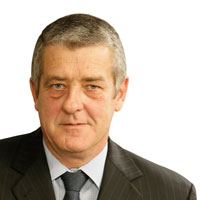
Glyn Lewis
Chief executive officer
20 September 2011