

- Print this page
- This page as PDF (121KB)
From the chairman and CEO

Publication of our third sustainable development report to a B+ level of reporting
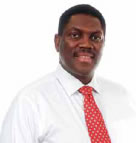
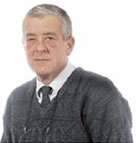
“We would like to be considered as a responsible and ethical corporate citizen by our employees, our business partners, our customers, our investors and our communities.”
P Lazarus Zim Glyn LewisDear stakeholders
In F2010, we took a number of significant steps towards the integration of sustainability management and reporting into the core operation of our business. An important part of this has been a consideration of what sustainability means to the business, and how we reflect this in our reporting.
Sustainability for Northam implies the sustainability of the business as a whole, with environmental, social and governance (ESG) issues forming an integral part of the way we conduct our business. For us this means:
- the responsible and profitable operation of the Zondereinde mine;
- the responsible and economic development and growth in our assets, primarily through the delivery into production of the Booysendal project; and
- compliance with listing and other requirements so that the company is able to maintain its licence to operate and to attract and retain capital.
In line with this increased air of attention and focus we felt the need to develop an over-arching sustainable development policy, pulling together our vision for the company and the various underlying policies relating to safety and health, environment and community development in place at an operational level. This policy is published here for the first time on page 15 and was approved by the board in August 2010.
Our vision is that the ESG elements of sustainability are a part of the way we conduct our business, and must be managed as such, with policies, targets and measurement systems in place to support the achievement of our objectives. To this end, we can report a number of achievements during the year including:
- publication of our third sustainable development report to a B+ level of reporting and the assurance of certain key performance indicators (KPIs) by an external assuror;
- submission of the Carbon Disclosure Project (CDP) questionnaire and recognition by CDP as a leading reporter;
- admission to the JSE SRI index for the third consecutive year;
- a corporate and then on-mine workshop on sustainability reporting and what it means for Northam. Identification of material issues and KPIs, the latter with on-mine line management participation;
- engagement of external consultants to review reporting criteria, definitions, processes and responsibilities for KPIs in respect of ESG issues. We also set up a data management system; and
- engagement of internal and external assurors to verify our identified KPIs.
As a minimum, we will comply with legislation and regulations that govern our operations and our listing. Further, we also seek to comply – as far as our business objectives allow – with recommendations of good practice and governance. We would like to be considered as a responsible and ethical corporate citizen by our employees, our business partners, our customers, our investors and our communities.
One report
In F2010, we have for the first time attempted to produce an integrated annual report – that is, one that addresses both financial and relevant ESG issues. This has not simply been a process of combining the financial and sustainable development reports, but has involved a fundamental consideration of those ESG issues that are important to all stakeholders and incorporating these into our annual report.
This has also not meant that we have dispensed with this, our separate sustainability report, that deals with specific ESG issues in sufficient detail to satisfy the needs of a broader group of shareholders.
The material issues we face
Last year we identified six key issues for F2009 and F2010. Those issues identified remain important to us, and we have identified three additional issues. Our material issues are outlined below and dealt with in greater detail within the pages of this report as well as in our annual report.
- Operating the Zondereinde mine, its concentrating and smelting operations efficiently and cost-effectively, and to maximise its life of mine (currently estimated at 18 years) to the fullest extent possible. (See the
annual report and
the economic performance section of this report)
During the period under review, production of metals in concentrate at Zondereinde increased by 6.3% to 321 475 ounces (F2009: 302 474 ounces) with the combination of production units and purchased metals increasing by 10% to 389 284 ounces (F2009: 318 131 ounces) .This is reflective of the company’s strategy to build up capacity for enhanced downstream beneficiation.
As a result of higher input costs, in particular labour, power, steel and chemicals and the 6.3% increase in production, operating costs increased by 17.0% to R2.2 million (F2009: R1.9 million). In addition, Northam paid some R21.4 million in royalties in terms of the Mineral Resources and Petroleum Royalty Act which came into effect in March 2010. This amount has been included in operating costs.
Sales revenue increased by 23.8% to R3.9 billion as a result of an 18.8% increase in volumes sold.
Operating profit decreased by 4% to R785.0 million (F2009: R817.9 million) as a result of increased production costs, the higher cost and volumes of concentrates purchased.
- Ensuring the safety of employees and contractors. (See
section on Safety, health and employee well-being)
Our safety performance in F2010 was pleasing with further improvements in safety indicators such as the lost time injury incidence rate (LTIIR) of 0.83 per 200 000 hours worked (F2009: 1.02) and a reportable injury incidence rate (RIIR) of 0.52 per 200 000 hours worked (F2009: 0.63).
This performance was sadly marred by a fatal accident at the Zondereinde mine during the year. The board and management extend their sincere condolences to the family and colleagues of Mr Sebenzile Ketile, who died on 13 May 2010 as a result of a drilling-related accident.
It is with deep regret that, subsequent to the end of F2010, Northam had to report the death of Messrs Avelino Cossa and Samussone Chithango after a fall of ground accident on 20 July 2010.
We will continue to make safety an area of focus in F2011 and to this end the board will continue to be supportive of the combined efforts of management, organised labour and the Department of Mineral Resources (DMR) in prioritising and promoting a work ethic that seeks to eliminate mining related injuries.
- Maintaining our credentials as a leading BEE company and meeting the requirements of the MPRDA and Mining Charter. (See
section on Employment and human rights)
We have continued to make progress on our broad-based BEE procurement – at 48% of total expenditure in F2010, on the employment and development of historically disadvantaged South Africans (HDSAs) – achieving 33% HDSAs in management in F2010 and 7% women in mining, in workplace training and development initiatives, and on identifying and implementing local economic development projects in our communities.
During the year, Northam embarked on a process of auditing and reviewing the quality and accuracy of data produced and the associated charter compliance enablers at Zondereinde to determine the level of compliance with the Mining Charter, and to assist in developing processes and practices to ensure the achievement of our Social and Labour Plan (SLP) targets.
- To deliver the Booysendal project at an acceptable capital cost and turn to account its extensive resources to a broad range of stakeholders. (See the
annual report)
During the year, Northam completed an optimisation exercise on the Booysendal feasibility study, the purpose of which was to determine whether further value could be extracted from the first phase of the Booysendal project. The results indicated that the start-up of production could be accelerated, that the mining layout could support a higher rate of production which should result in lower operating costs per unit.
On surface, the concentrator plant layout has been optimised to take account of the higher run of mine (ROM) production, resulting in a more efficient process flow and a smaller environmental footprint.
The revised mine design and higher rate of production at full capacity will result in electricity consumption exceeding the Eskom approved 20MVA during peak demand periods. These requirements will be fulfiled by self-generation of power on site (up to 5MVA) during peak times. This will continue until Eskom is able to supply additional power – currently estimated to be by 2014. The revised design also makes provision for an energy management system and the introduction of energy recovery strategies.
- To implement the ISO14001 environmental management system and to achieve certification against this standard. (See
section on environmental performance)
A great deal of progress towards the implementation of ISO14001 was made during the year with the scope of Zondereinde’s environmental impacts being identified and evaluated. The first phase of auditing was completed during F2010 with the second phase completed during September 2010. It is expected that Zondereinde will receive ISO14001 certification during the 2010 calendar year.
Zondereinde is in the process of implementing an Environmental Management Programme (EMP) and a training module has been developed which will be rolled out to employees during the following financial year.
- To optimise water usage both at Zondereinde
and at Booysendal – to use less water,
increase recycling, maintain water quality
(particularly important at Zondereinde
where extensive use is made of water for
hydro-power and cooling). (See Environmental
performance)
Increasingly, water is a scarce and costly resource. Northam voluntarily participated in the newly-established CDP Water Project and will seek to incrementally improve its water management and reporting strategies in the future.
- To optimise energy consumption and to
investigate potential and cost-effective
alternative sources of energy. (See pages
environmental performance)
Electricity supply remains under pressure in South Africa with significant implications for current operations and new projects, such as Booysendal. While the national utility Eskom has undertaken to meet current commitments, it is clear that it will be under great pressure to do so and that this will entail cost increases. Further electricity tariff increases in F2010 have meant that electricity now makes up 9.2% of our cost base, and this is set to rise further. We have placed a great deal of emphasis on co-operating fully with Eskom in Demand Side Management (DSM) both to reduce costs but also in support of Eskom’s own objectives.
- To debate, monitor and manage our climate
change strategy and, as part of that, to
reduce our CO2 emissions. (See pages
environmental performance)
We have continued to benchmark our CO2 emissions and have put in place more robust data gathering systems.
- To attract and retain investors in the
company and to be able to raise capital
cost-effectively to fund long-term
sustainable growth for all our stakeholders. (See the
annual report)
We believe the best way to do this is to:
- continue to achieve operational excellence by means of maximising cost-efficient production in a safe and healthy working environment;
- ensuring adequate mine life and ore resources to sustain future production growth;
- retaining integrated, independent operations with full control of metals from mine to market;
- attracting, developing and retaining the best available skills, technical expertise and management competence; and
- being a responsible corporate citizen.
Reporting and assurance
We have continued to adopt the Global Reporting Initiative’s (GRI) G3 guidelines for our reporting. Certain significant KPIs have been assured by our external auditors, E&Y and their assurance report is presented in this report. As is required by GRI we have declared an application level of B+ for the first time this year. This is in line with our stated intention of improving the level of disclosure in our reports only. In addition, this report was submitted for an assessment of the reporting level by GRI.
In conclusion
In conclusion, we wish to thank our employees, our shareholders, our communities and our partners for their continued support and contribution during the year.
P Lazarus Zim and Glyn Lewis
21 September 2010
Issues identified in F2010 – Nos 1, 8 and 9
NORTHAM SUSTAINABLE DEVELOPMENT REPORT 2010