![Go to home page [logo]](https://northam.co.za/assets/investors/reports/sd-2012/images/logo-northam-platinum-limited.png)
![Since 1992, all of Zondereinde’s PGM concentrate has
been toll-refined under contract with Heraeus [photo]](images/banner-products-and-markets.jpg)
Our products and markets
Our products – how the world uses PGMs
PGMs are the platinum group metals platinum, palladium, rhodium, ruthenium, iridium and osmium. They are particularly rare and share a set of unusual chemical properties which have made them indispensable to many critical sectors of the global economy. These characteristics include electrical stability and conductivity, ductility, durability, resistance to corrosion, resistance to oxidation and high melting points, which allow them to remain stable and strong even in environments of extreme heat.
Our markets
The past year has been a difficult period for the PGM markets. The broad growth in metal demand during 2011 receded into 2012 as markets suffered from the effects of widespread economic recession, particularly in the troubled Eurozone. The weaker demand has caused PGM prices to decline, a trend made worse by the oversupply of new metal to market, and in some cases by an increase in the volumes of recycled metal.
The peak price for platinum at US$1 729/oz in F2012 was reached in February. Palladium reached U$722/oz and rhodium was trading above U$1 500/oz. By the end of June 2012, these prices had dropped to U$1 400/oz for platinum, U$560/oz for palladium and rhodium fell to its lowest since April 2009 to U$1200/oz.
Supply and demand
![Platinum supply and demand [graph]](images/graph-platinum-supply-demand.png)
![Rhodium supply and demand [graph]](images/graph-rhodium-supply-demand.png)
![Palladium supply and demand [graph]](images/graph-palladium-supply-demand.png)
Gross demand by application 2010
![Gross demand for platinum by application (000oz) – 2010 [graph]](images/graph-platinum-gross-demand-2010.png)
![Gross demand for rhodium by application (000oz) – 2010 [graph]](images/graph-rhodium-gross-demand-2010.png)
![Gross demand for palladium by application (000oz) – 2010 [graph]](images/graph-palladium-gross-demand-2010.png)
Gross demand by application 2011
![Gross demand for platinum by application (000oz) – 2011 [graph]](images/graph-platinum-gross-demand-2011.png)
![Gross demand for rhodium by application (000oz) – 2011 [graph]](images/graph-rhodium-gross-demand-2011.png)
![Gross demand for palladium by application (000oz) – 2011 [graph]](images/graph-palladium-gross-demand-2011.png)
* Data sourced from Platinum 2012, Johnson Matthey
Here is a look at a few more common applications of PGMs, particularly platinum, palladium and rhodium and how they performed in the main PGMs markets – autocatalyst, jewellery and investment – during 2011 and the first half of the 2012 calendar year.
Autocatalysts
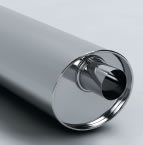
Autocatalysts are small devices installed in the exhaust systems of motor vehicles, designed to chemically control the environmentally harmful emissions that are part of exhaust fumes. Autocatalysts, coated with platinum or palladium, convert over 90% of hydrocarbons, carbon monoxide and oxides of nitrogen into less harmful carbon dioxide, nitrogen and water vapour.
As emissions control legislation continues to tighten in the fight against climate change, the importance of PGMs in the global automotive sector can only rise. The demand for platinum and palladium is therefore strongly tied to this pivotal industry, which was and continues to be affected by the global financial crisis.
Market performance
In the autocatalyst sector, the weakness in the Eurozone has been reflected in a significant decline in sales of motor vehicles.
European car sales in the first half of 2012 were 8% lower year-on-year than in 2011, and the European car market is now the single most worrying aspect of demand for PGMs.
The situation in the Japanese and United States (US) markets has been more positive. The Japanese car market has continued to recover from the combined effects of last year’s earthquake, tsunami and floods. Around 1.9 million vehicles were sold in the first half of 2012 – an increase of around 55% from 2011. In the US, more than 7.25 million cars and light-duty trucks were sold in the first six months of 2012 – a year-on-year increase of 15% while heavy-duty vehicle sales increased by around 25%.
Growth in the autocatalyst sector in China has remained positive, with increased demand for both Platinum and Palladium. Around 7.6 million vehicles were sold in the first half of 2012, almost 7% higher than in 2011.
Jewellery

In addition to its high resistance to tarnishing and its attractive lustre, platinum is also one of the densest metals in nature, giving it a strength ideal for jewellery. It can be heated and cooled again and again without losing its ductility, and even the most delicate pieces retain their shape, giving designers more creative freedom than they would have using other metals. Some rings made of platinum for example, are so strong that no fitting is required to secure the gemstones; they are held in place by the sheer tensile strength of the platinum alone.
Platinum jewellery is particularly sought after in the markets of the Far East, which accounts for more than half of global demand.
Market performance
In 2011, demand for platinum from jewellery manufacturers increased by around 2% to 2.5Moz and increased even more during 2012 supported by the recent downtrend in the platinum price.
China is the dominant market for platinum jewellery sales. In 2011, gross metal demand was almost 1.7Moz and manufacturers are reporting that demand increased during the first half of 2012.
Despite the earthquake in Japan during 2011, overall demand decreased only slightly and annual platinum consumption still exceeds 300 000oz.
Sales in the US have benefited from the increase amongst consumers of internet marketing and purchasing. In India, where the market continues to be dominated by a preference for gold jewellery, platinum sales during the first six months of 2012 are estimated to be around 80 000oz – making India the fourth largest market for Platinum jewellery after the US.
Overall jewellery sales in Europe have fallen.
Investment

Like gold, platinum is considered a long-term store of value and global investment markets offer a range of platinum-backed exchange traded funds. While supply and demand were quite finely balanced in 2010, there remains a conviction among global investors that the ever increasing demand for platinum will soon outweigh its supply, limited by its natural scarcity. This dynamic seems to be primarily responsible for the growing increase in platinum investment.
Market performance
In 2011, around 450 000oz of the platinum produced went into the investment market, which is a 30% decrease from 655 000oz the previous year.
Net investment in Palladium declined sharply during 2011 as elevated palladium prices prompted investors to redeem their holdings at profit. The same trend was experienced in the investment market for coins and small bars. Total investment was negative (565 000oz) as investors returned more than half a million ounces to the market during the year.
Chemical and manufacturing applications

PGM-based catalysts are used in many other areas of industry and manufacturing for their chemical resistance to corrosion and high heat thresholds. Manufacturers of glass, nitric acid, silicones, petroleum and plastics all use PGMs, either to achieve the right properties in the products themselves, or to enhance the efficiency or longevity of the equipment used in the manufacturing process.
Electronics

Because of their conductivity, durability, high temperature stability and oxidation resistance, platinum and palladium are used to build and coat many of the tiny electronic circuit components used in all types of digital devices from computers and mobile phones to specialist industrial equipment. The growing need for computers to store large amounts of information has also created a role for platinum, along with ruthenium, to improve their data storage capacity. As the world surges forward into the digital age, this is becoming an increasingly important area of PGM application.
Fuel cells
Fuel cells are electrochemical cells that convert chemical energy into electrical energy, in a similar way to batteries. Unlike batteries, however, fuel cells do not need to be recharged; the flow of electricity is continuous as long as the supply of fuel is maintained. Their only emission, apart from the electricity they generate, is water, making them one of the most promising developments of green technology.
Research is currently focused on the development of fuel cell technology for use in vehicles, as fuel cell vehicles have virtually zero emissions, but the possibilities extend much further than the road. Fuel cells will also be used as power sources in homes, offices and industry as an uninterrupted supplement to electricity supplied by national grids. They can be used on a smaller scale too, in hand-held electronic devices. As the research into fuel cells accelerates, the potential applications continue to multiply.
The most common source of fuel for fuel cells is a combination of hydrogen and oxygen, reacted in the presence of a catalyst, which is usually platinum. Platinum, sometimes enhanced with small amounts of ruthenium, is the best available material to speed up the oxidation and reduction reactions involved in the chemical process. Its durability also means that it consistently outlasts other possible catalyst candidates, making it certain that platinum will remain a permanent feature of fuel cells as they are further developed and commercialised.